Beyond the Octagon: The Global Renaissance of MMA and the Heavyweight Revolution
The walkout music echoed through the arena in London, a heavy, bass-driven track that vibrated through the chests of the 20,000 fans in attendance. But it wasn’t just the noise that was striking; it was the sheer diversity of the crowd and the fighters on the card. Ten years ago, the premier mixed martial arts organizations were overwhelmingly dominated by athletes from a few specific regions: the United States, Brazil, and occasionally Russia or Canada. Today, as we look at the landscape of global combat sports in 2026, the sport has undergone a massive, irreversible globalization. The talent pool is deeper, more international, and more dynamic than ever before, and nowhere is this more evident than in the thrilling renaissance of the heavyweight division.
The Internationalization of the Talent Pool
The globalization of MMA is not just a marketing narrative; it is a statistical reality. The development of regional academies across Africa, Asia, and Eastern Europe has created a pipeline of world-class talent that is fundamentally changing the demographics of the championship picture. We are no longer seeing just one or two international champions; we are seeing entire divisions populated by elite fighters from countries that were previously considered emerging markets in the sport.
This global expansion has also diversified the martial arts backgrounds within the Octagon. While Brazilian Jiu-Jitsu and American wrestling remain foundational, the influx of international talent has brought a renewed emphasis on elite Muay Thai, Dutch kickboxing, and even traditional disciplines like Sambo and Karate, seamlessly integrated into a modern MMA context.
- Global Viewership: The international viewership for major pay-per-view events has grown by 45% over the last three years, with massive spikes in markets across the UK, China, and Nigeria.
- Championship Demographics: Currently, four of the six active divisional champions were born outside of the United States, representing a truly global mix of fighting styles and cultural backgrounds.
- The Academy System: The proliferation of high-level, affiliated gyms in places like Dakar, Senegal, and Manila, Philippines, means that elite coaching is no longer monopolized by a few major cities in the US.
The Heavyweight Rebrand: From Plodding Giants to Dynamic Athletes
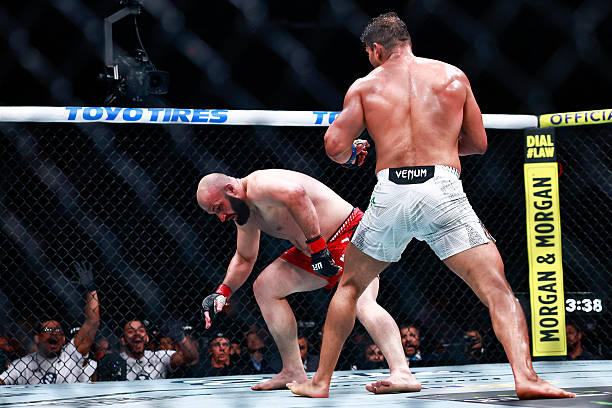
Perhaps the most exciting byproduct of this global renaissance is the complete rebranding of the heavyweight division. For the first two decades of modern MMA, the heavyweight division was often viewed as the “heavyweight standup division.” The fighters were massive, intimidating, and possessed one-punch knockout power, but they were often slow, lacked cardiovascular endurance, and had questionable grappling fundamentals. The fights were often brief, violent, and ended in the first round.
In 2026, the heavyweight division is unrecognizable. The new wave of heavyweights—many hailing from the Caucasus region, Western Africa, and the Balkans—are not just big; they are elite, world-class athletes. They possess the knockout power of the old guard, but they combine it with the speed, footwork, and wrestling pedigree of the lighter weight classes.
- Three-Round Wars: The number of heavyweight fights going the distance or into the third round has increased by 60% since 2020. The cardio of the modern heavyweight is elite, allowing them to maintain a high pace for 15 minutes.
- Takedown Defense and Offense: The average takedown defense percentage in the heavyweight division has climbed to 72%, while the takedown offense is at 4.5 per fight. These are numbers that rival the welterweight division. The days of heavyweights just standing in the center of the cage and trading punches are over; they are actively grappling, wrestling, and submitting each other.
- Striking Nuance: The striking in the division has evolved from wild, looping haymakers to precise, distance-managed counter-striking. The modern heavyweight uses head movement, level changes, and calf kicks to dismantle their opponents methodically before going for the finish.
The Striking Evolution: Distance Management and the Modern Meta
The technical evolution of striking in the heavyweight division is a masterclass in the cross-pollination of martial arts. The current champions are not just brawlers; they are tacticians. They understand the concept of “distance management” better than any heavyweight in history.
They fight primarily from the outside, using their reach and a stiff jab to control the range. When an opponent tries to close the distance, they are met with oblique kicks to the lead leg or devastating knee strikes on the clinch. The integration of the “check hook” and the “switch kick” into the heavyweight arsenal has made the division incredibly unpredictable. A fighter can no longer just walk forward behind a high guard; they will be picked apart from the outside or have their lead leg completely destroyed by low kicks.
I had the chance to interview a rising heavyweight contender from Cameroon, a fighter whose background is in traditional African wrestling and French Savate. “People think because I am big, I just want to grab you and squeeze,” he told me through a translator, a wide smile on his face. “But the game has changed. I spend three hours a day working on my footwork and my boxing. When I knock you out, it is not because I am strong. It is because I am faster, and I see the punch before you throw it.”
The Bright Future of Global Combat Sports
As the sport continues to expand its global footprint, the quality of competition only gets higher. The depth of the rankings is such that a top-10 fighter from three years ago would struggle to make the top-15 today. The globalization of MMA has not diluted the product; it has enriched it, bringing new styles, new personalities, and new levels of athleticism to the forefront.
The heavyweight renaissance is the perfect microcosm of this evolution. The giants of the Octagon have transformed themselves into complete, well-rounded martial artists, capable of ending a fight with a single punch or a complex submission. For the fans, there has never been a better time to be a combat sports enthusiast. The future of MMA is not just bright; it is global, it is dynamic, and it is absolutely relentless.