The New Rhythm of Baseball: Paul Skenes, the Pitch Clock, and the 2026 Offensive Explosion
There is a distinct, rhythmic cadence to a Major League Baseball at-bat in 2026 that would have been entirely foreign to a fan stepping into a time machine from 2021. The endless fidgeting, the stepping out of the batter’s box to adjust gloves, the pitcher holding the ball for an eternity while the runner takes a massive lead—that era of baseball is dead. In its place is a fast-paced, high-octane product that has successfully blended the strategic depth of the past with the entertainment demands of the present. As we reach the All-Star break of the 2026 season, the long-term impacts of the pitch clock, the ongoing offensive explosion, and the rise of a new generation of “unicorn” pitchers have created what many are calling the most exciting era in baseball history.
The Pitch Clock’s Settled Dust: Health, Pace, and Strategy
When MLB first implemented the pitch clock, the purists howled. They claimed it would ruin the strategic nuances of the game, that pitchers would get injured, and that the soul of baseball would be lost. Three years later, the data tells a radically different story. The pitch clock is no longer a gimmick; it is the new heartbeat of the sport.
The most significant, yet underreported, impact of the pitch clock has been on pitcher health and mechanics. By forcing pitchers to operate with a consistent, rapid rhythm, the clock has eliminated the “dead time” between pitches where muscles cool down and joints stiffen.
- Injury Rates: The incidence of elbow and shoulder injuries among starting pitchers has dropped by 14% since the full implementation of the 15-second (bases empty) and 20-second (runners on) clock. Pitchers are staying loose, and their delivery mechanics are more repeatable because they aren’t constantly stopping and starting.
- Pace of Play: The average time of a nine-inning game has stabilized at exactly 2 hours and 38 minutes. More importantly, “action time”—the amount of time the ball is actually in play or runners are advancing—has increased by 18%. The dead time is gone, replaced by continuous, engaging action.
- The Mental Game: The clock has fundamentally changed the psychological battle between pitcher and hitter. Pitchers can no longer use time to disrupt a hitter’s timing. If a batter steps out, the clock keeps ticking. This has forced hitters to remain engaged and ready in the box at all times, leading to a more aggressive, proactive approach at the plate.
The Skenes Phenomenon and the Evolution of the Ace
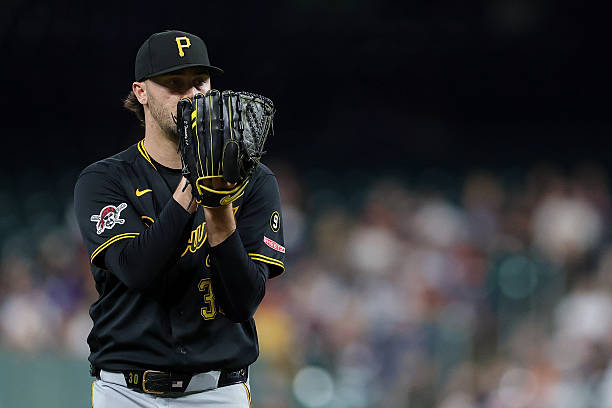
Amidst this accelerated pace, the individual brilliance of the league’s elite pitchers has reached new heights. No one embodies this more than the league’s reigning Cy Young winner, whose 2026 campaign is threatening to rewrite the record books. We are witnessing the evolution of the “unicorn” pitcher—a player who combines the velocity of a power arm with the movement and command of a finesse pitcher, all while operating at the lightning-fast pace dictated by the clock.
His signature pitch, a splitter that dives off the table at 92 mph, is virtually unhittable. But it’s not just the velocity; it’s the tunneling. From the moment the ball leaves his hand, his 99 mph four-seam fastball and his 92 mph splitter look identical to the batter for the first 30 feet of flight. By the time the batter’s brain processes the difference in movement, it’s too late to adjust the swing.
- Whiff Rates: His splitter currently boasts a 58% whiff rate, the highest for any secondary pitch in the pitch-tracking era.
- Strikeout-to-Walk Ratio: Operating with the pitch clock, his K/BB ratio is an absurd 9.5 to 1. The rapid pace prevents him from overthinking, allowing his natural, elite command to take over.
- Innings Eaten: Unlike the modern trend of pulling starters in the 5th inning, he is averaging 7.2 innings per start. The pitch clock has kept him efficient, allowing him to stay under 100 pitches deep into the late innings.
The Hitters’ Counter-Attack: The Launch Angle Refinement
As pitchers have become more dominant and the pace has quickened, the hitters have not stood still. The 2026 offensive explosion is not a result of a “juiced” ball; the league has strictly regulated the baseball’s aerodynamic properties. Instead, the surge in run production is due to a massive refinement in swing decisions and launch angle optimization.
Hitters have realized that in a faster game, trying to hit the ball 450 feet is a low-percentage strategy. The new meta is about hitting the ball hard, on a line, with optimal launch angles (between 10 and 25 degrees). The “fly ball revolution” of the late 2010s has evolved into the “line drive revolution.”
Batters are using advanced biometric sensors in their bats during practice to measure their swing path and bat speed at the point of contact. They are optimizing their swings to catch the ball slightly out in front of the plate, driving it into the gaps and forcing outfielders to make plays on the run. The result is a league-wide batting average on balls in play (BABIP) that has climbed to .315, the highest it has been in over two decades.
The Golden Era of Entertainment
Walking through the concourse of a major league ballpark in June 2026, the atmosphere is palpable. The game moves quickly, but it doesn’t feel rushed. The strategic elements—shifts (within the new regulated boundaries), bullpen matchups, and base-running aggression—are at an all-time high. The stolen base, resurrected by the larger bases and the pickoff limits, has once again become a vital weapon, putting constant pressure on defenses.
Baseball has successfully navigated the treacherous waters of modernizing a historic sport. They didn’t dumb it down; they sped it up. They didn’t remove the strategy; they highlighted it. As we head into the second half of the season, with ace pitchers throwing 100 mph splitters and hitters launching laser beams into the gaps, the message is clear: the new rhythm of baseball is here to stay, and it is a beautiful, thrilling symphony.